
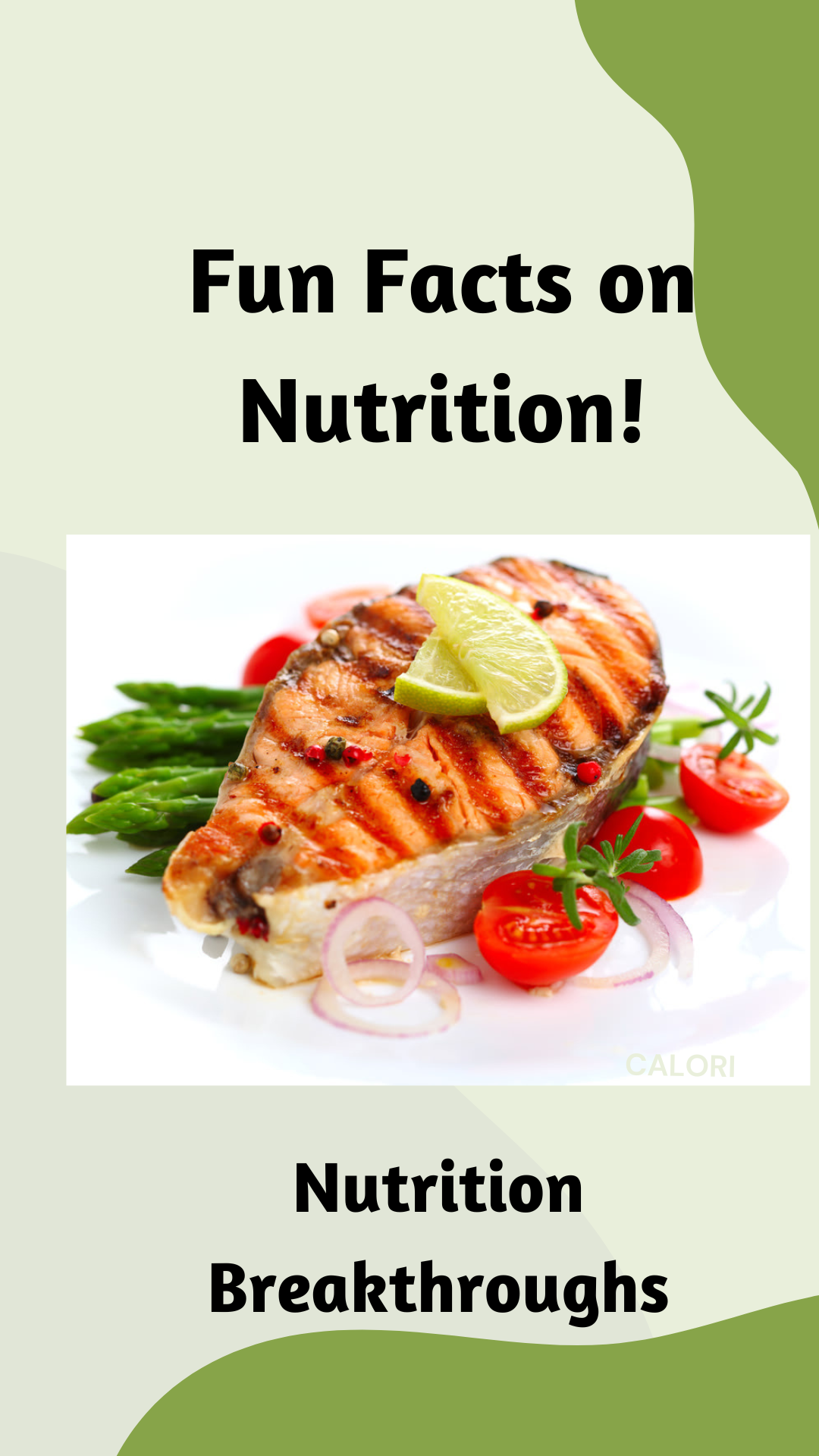
Fun Facts on Nutrition You’d Never Guess! – Issue #8

facts on nutritionHello! This eighth issue of “Fun Facts on Nutrition You’d Never Guess!” has some fascinating facts about the foods we eat.  Here we go!

  1. Chia Seeds Expand Up to 12 Times Their Weight

Chia seeds can absorb up to 12 times their weight in water, forming a gel-like substance. This property makes them excellent for healthy hydration and a great addition to smoothies and puddings.

The seeds are also rich in omega-3 fatty acids which strengthen immunity, and they also contain good amounts of fiber and protein.

To create an easy and creamy chia pudding, combine 4 tablespoons of chia seeds with one cup of your choice of milk (almond, coconut, or dairy) and 1 teaspoons of a sweetener (such as maple syrup or honey). Stir thoroughly, allow it to sit for 10–15 minutes, stir again, and then chill in the refrigerator for 4 hours or overnight.

Reference: Nieman, D. C. (2009). Influence of Chia Seed on the Immune System: Preliminary Results. Journal of Nutrition and Metabolism

  1. Why Do Apples Float? And Why Eat the Peels?

Ever wondered why apples float in water? It’s because they are composed of about 25% air. This makes them buoyant (staying afloat in water) and perfect for games like apple bobbing (which is grabbing floating apples with your teeth!). They’re also packed with fiber and vitamin C, making them a healthy snack.

Apple peels contain the most nutrients. Most of the apple’s fiber and vitamins are concentrated in the skin.  Granny Smith apples, due to their lower sugar and higher fiber content, may positively affect the gut health and also aid in weight control.

Reference: Boyer, J., & Liu, R. H. Apple phyto (plant) chemicals and their health benefits. Nutrition Journal

  1. Artichokes Are One of the Oldest Foods Known to Humans!

Artichokes have been consumed since ancient times and are believed to be one of the oldest foods known to humans. An artichoke is known as a “thistle plant.”  A thistle is a wild, spiny plant covered with sharp points that serve as protection against animals that may try to eat it. Although many thistles are labeled as weeds, certain varieties are edible and quite tasty—such as the globe artichoke.

Artichokes provide a wide range of health benefits, including promoting healthy liver function and detoxification, helping reduce cholesterol, balancing blood pressure, and improving digestive health.

Reference: Lattanzio, V. Globe artichoke: A functional food and source of nutraceutical ingredients. Journal of Functional Foods

  1. Green Peas Are a Source of Protein

Green peas are one of the few plant-based sources of protein, meaning they contain all nine essential amino acids that our bodies cannot produce on their own. They are also rich in vitamins A, C, K, and several B vitamins.

Peas support heart health, the immune system (high in vitamin C), bone health, and eye health (high in lutein).

Reference: FAO Complete Protein Profile of Legumes. Food and Agriculture Organization of the United Nations.

Fun and Health Go Hand-in-Hand

Isn’t nutrition interesting? From the ancient artichoke to the buoyant apple, these fun facts highlight the amazing world of food.  We will continue to bring you more surprising and inspiring nutritional facts to help you on your journey to healthy eating. Stay tuned!

About Nutrition Breakthroughs

This natural health news is shared by Nutrition Breakthroughs, maker of the original and effective calcium and magnesium based sleep aid Sleep Minerals II, and Joints and More, a natural supplement for joint relief, less aches and pains, stronger hair and nails, and more energy.

Fun Facts on Nutrition You’d Never Guess! – Issue #7

fun facts on nutritionHello, food lovers. It’s time for another exciting edition of “Fun Facts on Nutrition You’d Never Guess.”  Prepare to be delighted by some intriguing and entertaining facts about the foods we enjoy. Let’s get started!

1. Almonds Are Seeds, Not Nuts

Despite being commonly referred to as nuts, almonds are actually seeds of the fruit of the almond tree. They are packed with healthy fats, protein, fiber, and vitamin E, making them a nutritious snack. Almonds also contain magnesium and have also been proven to reduce overall hunger and not affect body weight when eaten.

Reference: A study published in the European Journal of Clinical Nutrition.

  1. Eggplants Are Technically Berries

Eggplants, also known as aubergines, are technically classified as berries. They belong to the nightshade family, along with tomatoes and potatoes. Eggplants are rich in fiber, vitamins, and antioxidants.  The main antioxidants for good health are vitamins E, A and C.  Foods with these nutrients can protect the body from unstable molecules that contribute to aging and disease.  So, enjoy some eggplant as a nutritious addition to your diet.

Reference: Raigón, M. D., (2008). Influence of organic and conventional cultivation methods on compounds and mineral content of eggplant fruits. Journal of Agricultural and Food Chemistry.

  1. Red Bell Peppers Have More Vitamin C Than Green Ones

Red bell peppers are simply ripened green peppers, and they contain significantly more vitamin C.  A single red bell pepper can provide up to three times the daily recommended intake of vitamin C (the recommended daily allowance of vitamin C is about 80 milligrams).  Red bell peppers can boost the immune system and enhance skin health, as vitamin C helps the body make collagen.

Reference: Marin, A. (2004). Profile of compounds in green and red peppers  grown in different types of soil. Journal of the Science of Food and Agriculture.

  1. Pine Nuts Come from Pine Cones

Pine nuts are the edible seeds of pine trees, and they are actually found inside pine cones. Extracting them is quite labor-intensive, which is why they can be pricey. These little seeds are packed with protein, healthy fats, and magnesium.

Reference: Evaristo, I. (2010). Pine nuts: A review of recent clinical research.

Fun and Health Go Hand-in-Hand

Isn’t nutrition fascinating? From the hidden pine nut to the berry-like eggplant, these fun facts on nutrition highlight the amazing world of food.  We will continue to bring you more of these surprising and inspiring facts to help you on your journey to healthier eating. Stay tuned and happy munching!

About Nutrition Breakthroughs

This natural health news is shared by Nutrition Breakthroughs, maker of the original and effective calcium and magnesium based sleep aid Sleep Minerals II, and Joints and More, a natural supplement for joint relief, less aches and pains, stronger hair and nails, and more energy.

Fun Facts on Nutrition You’d Never Guess! – Issue #4

nutrition factsWelcome to another edition of “Fun Nutrition Facts!” Get ready to be entertained and inspired by some fascinating tidbits about the food we eat. Let’s dive in.

  1. Peppers Can Help with Pain Relief

Capsaicin is a plant chemical found in the fruit of chili peppers that gives them their burning sensation and sense of heat. Capsaicin is known for its pain-relieving properties. It works by desensitizing nerve receptors and is often used in topical creams to alleviate pain from arthritis and other conditions.  A soothing solution!

Reference: Anand, P., & Bley, K. (2011). Topical capsaicin for pain management: Therapeutic potential and mechanisms of action of the new capsaicin 8% patch. British Journal of Anaesthesia, 107(4), 490-502.

  1. Cranberries Can Prevent Urinary Tract Infections

Cranberries contain proanthocyanidins – plant chemicals that give the fruit or flowers of plants their red, blue, or purple colors.  This plant substance can prevent bacteria from adhering to the walls of the urinary tract. This makes cranberries effective in preventing urinary tract infections (UTIs) and they’re also helpful for gum health by preventing oral bacterial from binding together. Enjoy unsweetened, diluted cranberry juice or dried unsweetened cranberries for a tasty health boost.

Reference: Jepson, R. G., Williams, G., & Craig, J. C. (2012). Cranberries for preventing urinary tract infections. Cochrane Database of Systematic Reviews, (10), CD001321.

  1. Kiwi Fruit Can Improve Sleep Quality

Eating two kiwis an hour before bedtime can improve sleep quality per recent studies. Kiwis are rich in serotonin and antioxidants (substances that keep cells healthy), both of which can help you fall asleep faster and sleep more soundly. Sweet dreams are made of kiwis.

Reference: Lin, H. H., Tsai, P. S., & Fang, S. C. (2011). Effect of kiwifruit consumption on sleep quality in adults with sleep problems. Asia Pacific Journal of Clinical Nutrition, 20(2), 169-174.

Fun and Health Go Hand-in-Hand

Isn’t nutrition fascinating? From pain-relieving peppers to sleep-enhancing kiwis, these fun nutrition facts highlight the amazing world of food. We’ll bring you more surprising and inspiring nutritional facts to help you on your journey to healthier eating. Stay tuned!

This natural health news is shared by Nutrition Breakthroughs, maker of the original and effective calcium and magnesium based sleep aid Sleep Minerals II, and Joints and More, a natural supplement for joint relief, less aches and pains, stronger hair and nails, and more energy.

Fun Facts on Nutrition You’d Never Guess! – #2

fun facts on nutritionWelcome back to another edition of our “Fun Facts on Nutrition!” Get ready to be intrigued by some fascinating and little-known facts about food. Here’s to your enjoyment of a fun and nutritious day.

  1. Potatoes Were the First Food Grown in Space

In 1995, NASA and the University of Wisconsin collaborated to grow potatoes in space aboard the space shuttle Columbia. This experiment was part of a larger effort to develop sustainable food sources for long-term space missions. Talk about out-of-this-world nutrition.

Reference: Wheeler, R. M. (2010). Plants for human life support in space: From Myers to Mars. Gravitational and Space Biology Bulletin, 23(2), 25-35.

2. Bell Peppers Have More Vitamin C Than Oranges

While oranges are famous for their vitamin C content, bell peppers actually contain even more. A single cup of chopped red bell pepper provides nearly three times the vitamin C of an orange. Plus, they’re low in calories and rich in health-giving plant chemicals known as antioxidants, making them a perfect snack.

Reference: Howard, L. R., et al. (2000). Antioxidant activity and fruit quality changes in bell pepper. Journal of Agricultural and Food Chemistry, 48(4), 1713-1720.

3. Avocados Are Actually Berries and Have Many Benefits

Surprise. Avocados are technically berries. They contain one large seed, fitting the botanical definition of a berry. Avocados are also nutritional powerhouses, full of healthy fats, fiber, potassium, and vitamins C, E, and K.

In addition, there are many studies showing the benefits of avocado for heart health, as well as for weight management and anti-aging effects.

Reference: Dreher, M. L., & Davenport, A. J. (2013). Hass avocado composition and potential health effects. Critical Reviews in Food Science and Nutrition, 53(7), 738-750.

Fun and Health Go Hand-in-Hand

Isn’t nutrition interesting? These fun facts on nutrition highlight the amazing world of food. We’ll regularly bring you inspiring nutritional facts for your excellent health.

This health news is shared by Nutrition Breakthroughs, maker of the original calcium and magnesium based sleep aid Sleep Minerals II, and Joints and More, a natural supplement for joint relief, less aches and pains, stronger hair and nails, and more energy.

Fun Facts on Nutrition You’d Never Guess! – Issue #1

Greetings to you,

Welcome to the first edition of our “Fun Facts on Nutrition” series. Get ready to be intrigued and inspired by some fascinating and little-known tidbits about the food we eat.

  1. Carrots Were Originally Purple

Here’s a fun one: the original color of carrots was purple, not orange. Orange carrots were developed by Dutch farmers in the 17th century through selective breeding to honor the House of Orange (the royal family of the Netherlands). Purple carrots are still a popular option and are rich in plant chemicals that are healthy for the heart and act to delay cellular aging.

Reference: Simon, P. W. (2000). Domestication, Historical Development, and Modern Breeding of Carrot. Plant Breeding Reviews, 19, 157-190.

  1. Honey Never Spoils

Archaeologists have found pots of honey in ancient Egyptian tombs that are over 3,000 years old and still perfectly edible! Honey’s low water content and acidic pH create an inhospitable environment for bacteria, making it one of the few foods that can last indefinitely.

Reference: Snowdon, J. A., & Cliver, D. O. (1996). Microorganisms in honey. International Journal of Food Microbiology, 31(1-3), 1-26.

  1. Tomatoes Were Once Considered Poisonous

Believe it or not, during the 18th century, Europeans considered tomatoes to be poisonous. This was due to their similarity to the deadly belladonna nightshade herbal plant. It wasn’t until the late 1700s that tomatoes became a staple in the European diet. Today, they’re celebrated for their high vitamin C and lycopene content, a red-colored plant chemical which is good for the heart and can also help to slim the waistline.

References: 1. Rick, C. M. (1980). Tomato. Economic Botany, 34(2), 107-129.
2. A study on tomato juice from the China Medical University in Taiwan.

Fun and Health Go Hand-in-Hand

Join us next week for some more “Fun Facts on Nutrition.”  Here’s to your good health and well-being.

This health news is shared by Nutrition Breakthroughs, maker of the original calcium and magnesium based sleep aid Sleep Minerals II, and Joints and More, a natural supplement for joint relief, less aches and pains, stronger hair and nails, and more energy.